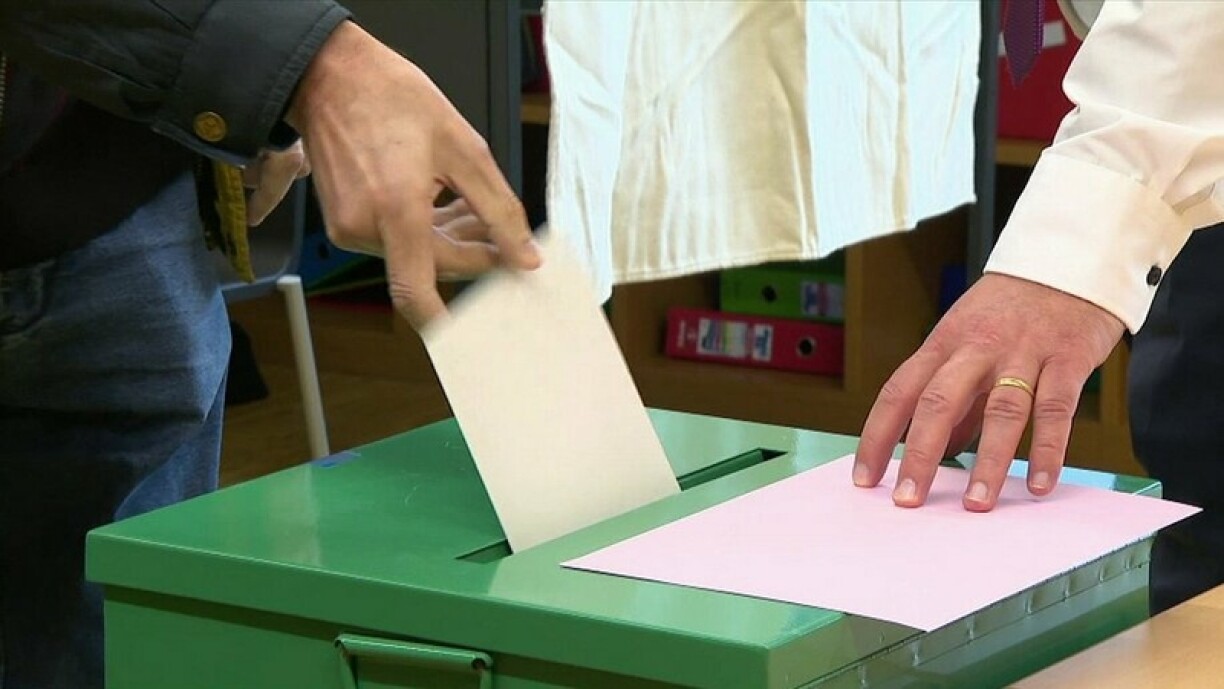
D'Residenzklausel bei de Gemengewale gëtt ofgeschaaft an d'Delaien, fir sech als Auslänner anzeschreiwen, gi gekierzt. Dat deementspriechend Gesetz gouf e Mëttwoch den Owend mat breeder Majoritéit an der Chamber ugeholl. Just d'adr huet dogéint gestëmmt. Bis ewell gouf et eng Residenzklausel vu 5 Joer, fir kënnen un de Walen deelzehuelen. Elo dierf een direkt bei de Gemengewale seng Stëmm ofginn, et muss ee sech awer nach ëmmer aschreiwen, elo spéitstens 55 Deeg virun de Walen. Et bleift awer dobäi, datt ee muss 6 Méint an enger Gemeng wunnen, fir sech fir d'Walen opzestellen.
An deem selwechte Gesetz gëtt och d'Iwwerwaachungsmissioun vun der Medienautoritéit ALIA bei de Walen definéiert. Op Ufro vun CSV gouf doriwwer eenzel ofgestëmmt, hei gouf et just eng Majoritéit vu 35 Stëmmen.
Le vote aux élections communales pour tous les résidents du Grand-Duché de Luxembourg (14.07.2022) | |
| |
| |
La ministre de la Famille et de l'Intégration, Corinne Cahen, la ministre de l'Intérieur, Taina Bofferding, et la ministre de la Justice, Sam Tanson, se félicitent du vote, hier, à la Chambre des députés, de la loi modifiant la loi électorale modifiée du 18 février 2003. Les modifications visent notamment l’abolition de la clause de résidence de cinq ans pour les ressortissants étrangers désirant s’inscrire sur les listes électorales pour les élections communales et le prolongement du délai pour s’inscrire sur lesdites listes. L’objectif de ces modifications est de faciliter la participation des ressortissants étrangers aux élections communales. En outre, des modifications ponctuelles sont effectuées afin de tenir compte des deux modifications majeures prévues. Grâce à ces modifications, tout citoyen pourra désormais participer aux élections communales, peu importe sa nationalité et sa durée de résidence. L’abolition de la clause de la durée de résidence de 5 ans s’adresse à tous les citoyens non-luxembourgeois, qu'ils soient européens ou venant d'un pays tiers. La ministre de l’Intérieur, Taina Bofferding, espère, par ces mesures, «une participation accrue des étrangers à la vie politique du pays. Parce que même si le taux d’inscription ne cesse d’augmenter depuis 1999, les 22,8% atteints lors des élections communales de 2017 sont loin d’être satisfaisants!» La campagne nationale de sensibilisation et d'information « Je peux voter » doit apporter une contribution importante à l'augmentation du taux d'inscription. Celle-ci vise à sensibiliser les citoyens à l'importance de participer aux décisions concernant l'avenir de leur commune. D'après les chiffres du ministère de la Famille, de l'Intégration et à la Grande Région et du Centre d'études et de formations interculturelles et sociales (CEFIS), 33% (75.226 personnes) n'ont pas pu s'inscrire sur les listes électorales avant les élections de 2017 parce qu'ils n'habitaient pas encore depuis au moins 5 ans au Grand-Duché de Luxembourg. La ministre de la Famille et de l'Intégration a souligné l'importance et l'impact de cette modification: «Les gens obtiennent le droit de vote dès qu'ils arrivent dans leur commune. Ils peuvent immédiatement participer à la vie politique et ils peuvent ainsi s'intégrer plus facilement en s'intéressant aux décisions politiques qui ont un impact sur leur vie.» Un autre changement important pour renforcer la participation politique concerne le délai d'inscription des ressortissants non-luxembourgeois sur les listes électorales. Afin de permettre à davantage de citoyens non-luxembourgeois de participer aux élections communales, la nouvelle loi prolonge de 32 jours le délai d'inscription des ressortissants non-luxembourgeois sur les listes électorales. Ainsi, le dernier jour d'inscription sur les listes électorales, et donc le jour de l'arrêt provisoire des listes, est reporté du 87e au 55e jour avant les élections. La ministre de la Justice a souligné l'importance de réduire au maximum les délais d'inscription: «Afin de faciliter au maximum l'inscription des ressortissants non-luxembourgeois sur les listes électorales, nous avons introduit une procédure accélérée pour formuler un recours devant la Cour administrative. Cette mesure permettra un gain de temps considérable dans le cadre du processus d'inscription requis. Notre objectif final demeure celui d'associer nos concitoyens non-luxembourgeois au processus démocratique, car nous considérons le droit de vote comme un facteur d'intégration essentiel. » Voting in municipal elections open for all residents of the Grand Duchy of Luxembourg The Minister for Family Affairs and Integration, Corinne Cahen, the Minister for Home Affairs, Taina Bofferding, and the Minister of Justice, Sam Tanson, are pleased with yesterday's vote in the Chamber of Deputies on the law amending the amended electoral law of 18 February 2003. The amendments aim in particular at abolishing the five-year residence clause for foreign nationals wishing to register on the electoral lists for the communal elections and at extending the deadline for registering on these lists. The aim of these changes is to facilitate the participation of foreign nationals in municipal elections. In addition, specific amendments are made to take account of the two major changes planned. Thanks to these changes, any citizen will now be able to take part in municipal elections, regardless of their nationality and length of residence. The abolition of the 5-year residence clause applies to all non-Luxembourg citizens, whether they are European or from a third country. The Minister for Home Affairs, Taina Bofferding, hopes that these measures will lead to "an increased participation of foreigners in the political life of the country. Because even though the registration rate has been rising steadily since 1999, the 22.8% achieved in the 2017 municipal elections is far from satisfactory!" An important contribution to a higher registration rate is to be made by the national awareness-raising and information campaign "I can vote". It aims to make citizens aware of the importance of having a say in the future of their community. According to figures from the Ministry of Family Affairs, Integration and the Greater Region and the Centre for Intercultural and Social Studies and Training (CEFIS), 33% (75,226 people) were unable to register on the electoral roll before the 2017 elections because they had not yet lived in the Grand Duchy of Luxembourg for at least five years. The Minister for Family Affairs and Integration stressed the importance and impact of this change: "People get the right to vote as soon as they arrive in their commune. They can immediately participate in political life and they can integrate more easily by taking an interest in the political decisions that affect their lives." Another important change to increase political participation concerns the deadline for non-Luxembourg nationals to register to vote. In order to allow more non-Luxembourg citizens to participate in municipal elections, the government aims to extend the deadline for non-Luxembourg citizens to register to vote by 32 days. Thus, the last day of registration on the electoral roll, and therefore the day of the provisional closure of the roll, is postponed from the 87th to the 55th day before the elections. The Minister of Justice emphasised the importance of reducing the registration deadlines as much as possible: "In order to facilitate the registration of non-Luxembourg nationals on the electoral roll, we have introduced an accelerated procedure with the Administrative Court. This measure will save a considerable amount of time for the entire required registration process. Our ultimate goal remains to include our non-Luxembourg citizens in the democratic process, because we consider the right to vote to be an essential factor of integration." Wahlrecht bei den Kommunalwahlen für alle im Großherzogtum Luxemburgs ansässigen Personen Die Ministerin für Familie und Integration, Corinne Cahen, die Ministerin für Inneres, Taina Bofferding, und die Ministerin der Justiz, Sam Tanson, begrüßen die gestrige Abstimmung in der Abgeordnetenkammer über das Gesetz zur Änderung des geänderten Wahlgesetzes vom 18. Februar 2003. Die Änderungen zielen insbesondere auf die Abschaffung der fünfjährigen Wohnsitzklausel für ausländische Staatsangehörige, die sich in die Wählerlisten für die Kommunalwahlen eintragen lassen wollen, und auf die Verlängerung der Frist für die Eintragung in die genannten Listen ab. Ziel dieser Änderungen ist es, die Teilnahme ausländischer Staatsangehöriger an den Kommunalwahlen zu erleichtern. Darüber hinaus werden punktuelle Änderungen vorgenommen, um den beiden geplanten größeren Änderungen Rechnung zu tragen. Dank dieser Änderungen kann künftig jeder Bürger an den Kommunalwahlen teilnehmen, unabhängig von seiner Staatsangehörigkeit und seiner Aufenthaltsdauer. Die Abschaffung der Klausel der fünfjährigen Aufenthaltsdauer richtet sich an alle nicht-luxemburgischen Bürger, unabhängig davon, ob sie EU-Bürger sind oder aus einem Drittstaat kommen. Die Ministerin für Inneres Taina Bofferding erhofft sich durch diese Maßnahmen „eine stärkere Beteiligung von Ausländern am politischen Leben des Landes. Denn auch wenn die Registrierungsrate seit 1999 kontinuierlich steigt, sind die 22,8 %, die bei den Kommunalwahlen 2017 erreicht wurden, alles andere als zufriedenstellend!“ Einen wichtigen Beitrag zu einer höheren Registrierungsrate soll die nationale Sensibilisierungs- und Informationskampagne "Ich kann wählen" leisten. Diese zielt darauf ab, die Bürger dafür zu sensibilisieren, wie wichtig es ist, über die Zukunft ihrer Gemeinde mitzuentscheiden. Nach den Zahlen des Ministeriums für Familie, Integration und die Großregion und des Centre d'études et de formations interculturelles et sociales (CEFIS) konnten sich 33% (75.226 Personen) vor den Wahlen 2017 nicht in die Wählerlisten eintragen lassen, weil sie noch nicht seit mindestens fünf Jahren im Großherzogtum Luxemburg lebten. Die Ministerin für Familie und Integration betonte die Bedeutung und die Auswirkungen dieser Änderung: „Die Menschen erhalten das Wahlrecht, sobald sie in ihrer Gemeinde ankommen. Sie können unmittelbar am politischen Leben teilnehmen und sich leichter integrieren, indem sie sich für die politischen Entscheidungen interessieren, die ihr Leben betreffen.“ Eine weitere wichtige Änderung zur Stärkung der politischen Partizipation betrifft die Frist für die Eintragung von nicht-luxemburgischen Staatsbürgern in die Wählerlisten. Um mehr nicht-luxemburgischen Bürgern die Teilnahme an Kommunalwahlen zu ermöglichen, verlängert das neue Gesetz die Frist für die Eintragung von nicht-luxemburgischen Staatsangehörigen in die Wählerlisten um 32 Tage. So wird der letzte Tag der Eintragung in die Wählerlisten und damit der Tag der vorläufigen Einstellung der Listen vom 87. auf den 55. Tag vor den Wahlen verschoben. Die Ministerin der Justiz betonte, wie wichtig es sei, die Fristen für die Eintragung in das Wählerverzeichnis so weit wie möglich zu verkürzen: „Um die Eintragung in das Wählerverzeichnis für Nicht-Luxemburger so einfach wie möglich zu machen, haben wir ein beschleunigtes Verfahren beim Verwaltungsgericht eingeführt. Diese Maßnahme wird es uns erlauben eine Menge Zeit bei dem gesamten Registrierungsprozess einzusparen. Unser oberstes Ziel bleibt es, die nicht-luxemburgischen Bürgerinnen und Bürger in den demokratischen Prozess einzubeziehen, denn wir betrachten das Wahlrecht als einen wesentlichen Faktor der Integration.“ |