
Duerch de Large-Scale-Testing konnten tëscht dem 27. Mee an dem 15. September knapp 1.800 Neiinfektioune verhënnert ginn. Dat geet aus enger Etüd ervir, déi e Samschdeg vu Membere vun der Covid-19-Taskforce verëffentlecht gouf.
D’Etüd ass scho vun anere Wëssenschaftler gepréift ginn an huet domat déi sougenannte "peer review" ofgeschloss. D’Publikatioun wäert am renomméierte Wëssenschaftsmagazin "The Lancet" publizéiert ginn.
Wat gouf analyséiert?
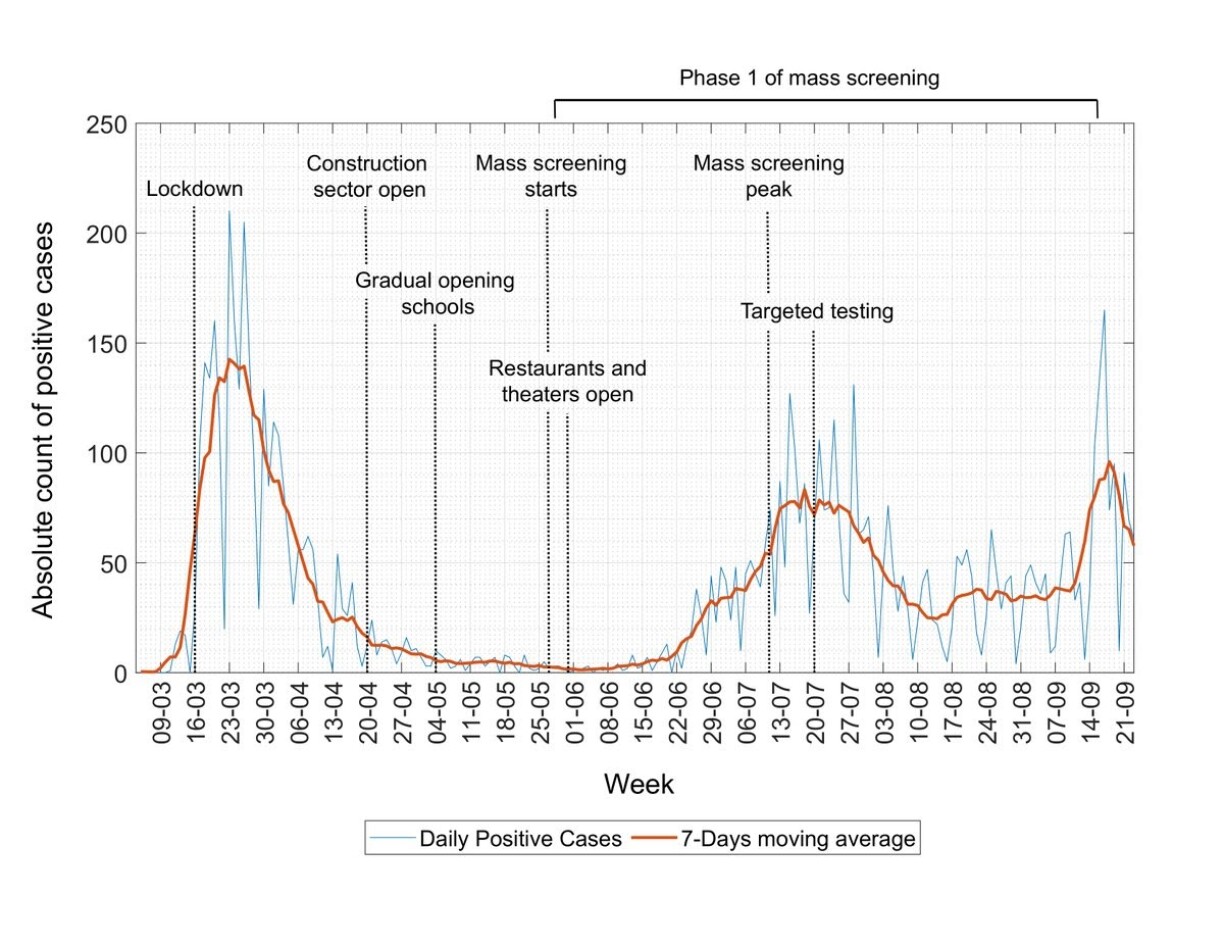
D'Lëtzebuerger Wëssenschaftler wollten erausfannen, wéi een Impakt déi éischt Phas vum Large-Scale-Testing op de Verlaf vun der Pandemie hat. Déi éischt Phas vum Large-Scale-Testing ass vum 27. Mee bis de 15. September gelaf, wou och déi zweet Infektiounswell am Grand-Duché wärend dem Summer dra gefall ass. 49 Prozent vun de Residenten an 22 Prozent vun de Frontalieren hunn un der éischter Phas vum LST matgemaach. 26 Prozent vun all de positive Fäll konnten an deem Zäitraum op de Large-Scale-Testing zréckgefouert ginn.
Wat sinn déi zentral Erkenntnisser?
Och Persounen, déi keng Symptomer hunn, kënne bei enger Infektioun de Virus weider ginn. Asymptomatesch Leit hu liicht manner Persounen infizéiert wéi symptomatescher.
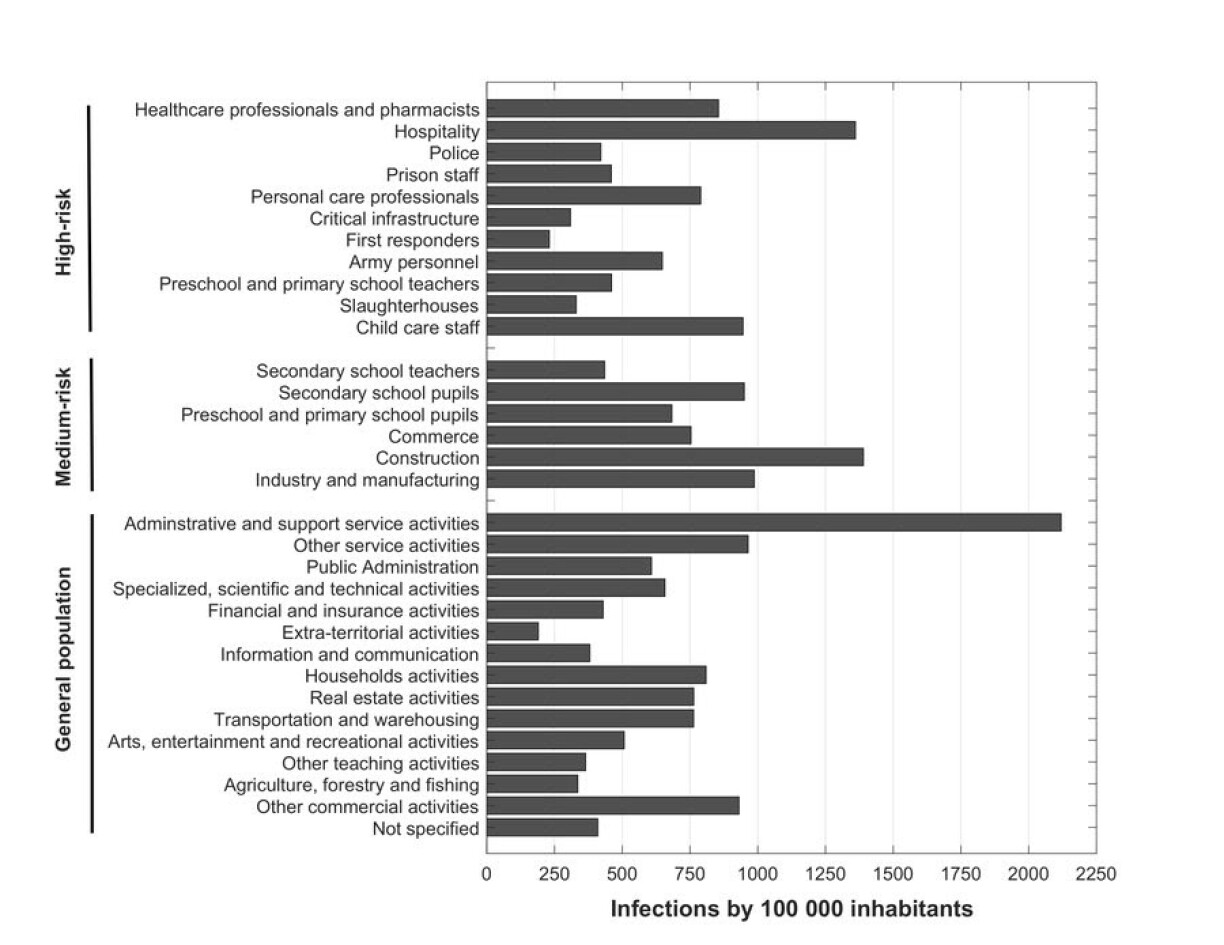
A verschiddene Secteure gëtt et ee méi groussen Infektiounsrisiko, beispillsweis am Déngschtleeschtungssecteur, beim Gesondheetspersonal oder am Secteur vun der Constructioun.
Och sozio-ekonomesch Facteuren hunn een Afloss op den Infektiounsrisiko.
Modelléierungen hu gewisen, datt et ouni de Large-Scale-Testing an der Period Mee bis September 42,9 Prozent méi Infektioune ginn hätt. Dat wiere knapp 1.800 Neiinfektioune fir deen Zäitraum gewiescht.
Hätten nach méi Persoune matgemaach a wier nach méi heefeg getest ginn, wier den Impakt nach méi grouss gewiescht. Bei 100 Prozent Participatioun hätten zousätzlech 1.650 Infektioune kënne verhënnert ginn.
Hei kënnt Dir déi ganz Etüd liesen.

COVID-19: mass screening reveals significant transmission risk from asymptomatic carriers
Based on the results of the large-scale testing programme run in Luxembourg, researchers show that asymptomatic SARS-CoV-2 carriers represent an important vector for transmission.
Large-scale testing for SARS-CoV-2 has been a topic of intense political and societal debate, the rationale for screening asymptomatic individuals having been in particular questioned. Nevertheless, whether asymptomatic carriers play an important role in population-based transmission has remained an essential question.Luxembourg had been one of the first countries to implement a large-scale testing programme in May 2020, offering all of its residents and cross-border workers the opportunity to regularly and voluntarily get tested for free. The first phase of testing ran from 27 May until 15 September 2020 covered 49% of the resident and 22% of the cross-border worker populations, enabling the detection of 26% of all positive cases of the first epidemic wave. This provided decision makers with evidence-based data and allowed to break infection chains early whereby the total number of cases would have been 43% higher without the testing over this period as shown by computer simulations.
In addition, large-scale testing provides a unique test case for assessing the role of asymptomatic carriers. Based on the contact tracing data from phase 1 of the large-scale testing programme, Luxembourg researchers revealed that asymptomatic SARS-CoV-2 carriers are likely similarly infectious compared to symptomatic individuals.
"Indeed, our data show that they infect on average a similar number of people as symptomatic individuals. Asymptomatic carriers, including those that are presymptomatic at the time of the test, thereby represent an important factor in triggering and sustaining infection chains."
Paul Wilmes, Luxembourg Centre for Systems Biomedicine, University of Luxembourg
The testing strategy was designed in a 3-layered approach by estimating exposure to the disease and physical proximity to categorise activity sectors into high and medium risk. Not surprisingly, the analysis shows that people who worked in the high-risk sectors had greater odds of being tested positive. Moreover, the data revealed that individuals with a disposable household income of less than 30k€/year also had the highest risks of being infected.
"In addition to its direct effect on infection dynamics, the large-scale testing also enabled the collection of a wealth of pseudonymised data that can now be exploited to learn more about SRAS-CoV-2."
Ulf Nehrbass, CEO of the Luxembourg Institute of Health
By clarifying the role of asymptomatic carriers in the transmission of SARS-CoV-2, this analysis provides essential insights for the development of future population-level containment and mitigation strategies.
About the large-scale testing
As part of its lockdown exit strategy, Luxembourg implemented an extensive and unique nation-wide testing campaign, inviting its residents and cross-border workers to voluntarily get tested for SARS-CoV-2. The aim of this large-scale testing (LST) initiative was to limit the spread of the SARS-CoV-2 virus by identifying positive cases early, including among asymptomatic individuals, thereby pre-emptively breaking infection chains. At the same time, LST contribute to the close monitoring of the spread of the virus among the Luxembourg population.
The first phase of the LST, coordinated by the Luxembourg Institute of Health (LIH) and supported by researchers at the University of Luxembourg, ran from 27 May until 15 September 2020 and relied on 16 'drive-through' and 1 'walk-through' test stations, with a maximum theoretical capacity of 20,000 tests per day. The population was divided into three main categories with different testing intervals. The first category was composed of people exposed to a high infectious risk by their professional activity (such as healthcare professionals) whereas the second category consisted of those having resumed their professional activity or were about to get back to work. The third category encompassed representative samples of the general population. The recurrent testing of the contingents and the rigorous contact tracing not only aimed at breaking nascent infection chains but also at providing decision makers with evidence-based data. Over the first phase of the LST, a total of 566,320 tests was performed based on a total of 1,436,000 invitations, which corresponds to 69,7% of all tests performed and an overall response rate of 39,4%.
Learn more on the large-scale testing
Read the article on The Lancet Regional Health – Europe website